
How to keep four elevation renders consistent
Materials, lighting, and architectural details often drift from one view to the next. A shared visual brief keeps every side of the building in the same world.
- Published
- September 9, 2026
- Reading time
- 6 min read
01
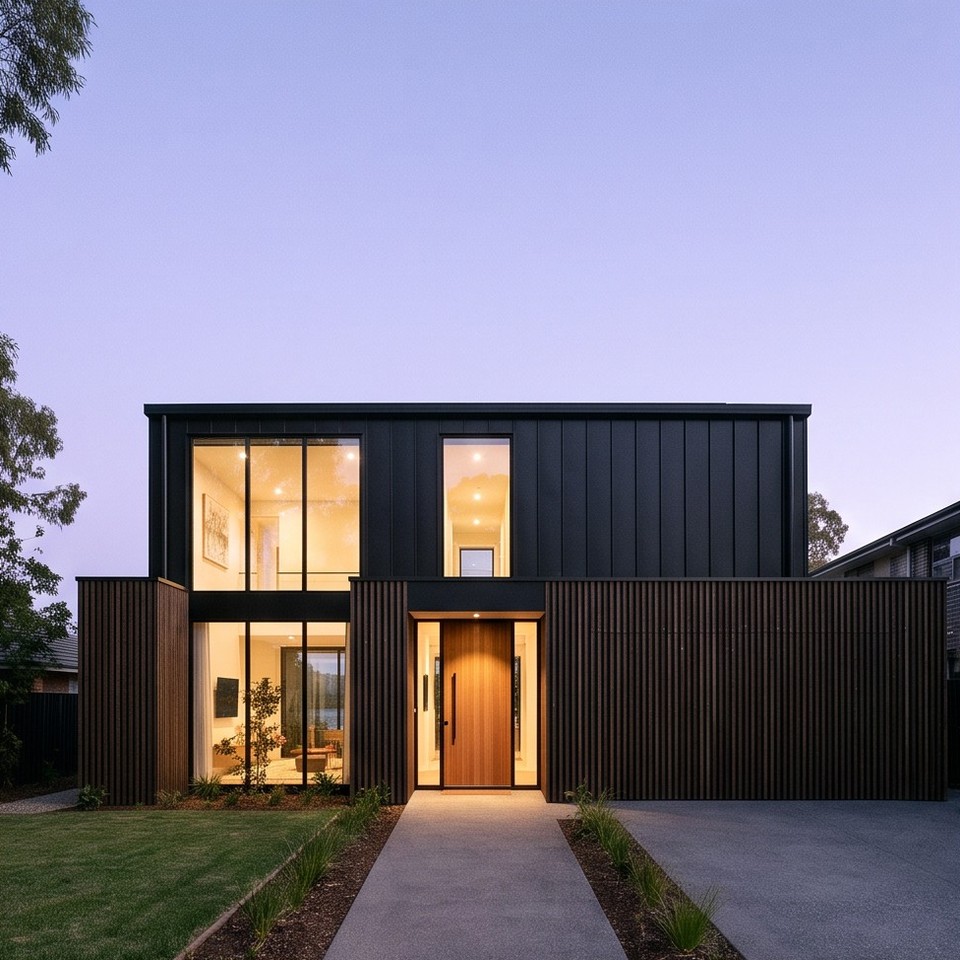
Create one visual brief for the whole building
Write the brief once and reuse it across front, rear, left, and right views. It should define the project’s main materials, glazing character, roof finish, landscape type, weather, and time of day.
Avoid rewriting the prompt from memory for every elevation. Small wording changes can create large visual differences, especially in colour temperature and material scale.
- Primary and secondary façade materials
- Window frame colour and reflectivity
- Ground treatment and planting palette
- Weather, sun direction, and time of day
02
Use the first approved image as the benchmark
Choose the clearest elevation for the first render. Refine it until the material balance and atmosphere are right, then use that image as a visual reference for the remaining sides.
The benchmark is not permission to copy geometry from the first view. It is a source for colour, texture, lighting, and presentation language while each elevation keeps its own structure.
03
Protect architectural invariants
List what must never change: opening count, roof pitch, balcony depth, column positions, and major edges. These constraints are especially important on elevations with fewer visual cues, where an AI model may otherwise simplify or embellish the design.
04
Review the set, not isolated images
Place all four results side by side and compare the same elements across views. Check whether a cladding band wraps the corner, whether roof edges share one finish, and whether the landscape belongs to the same site.
A coherent set is more valuable than four individually dramatic images. Resolve mismatches before increasing resolution or adding final presentation effects.
“Consistency comes from shared constraints: one material schedule, one lighting condition, one landscape language, and an explicit list of geometry that cannot change.”